
How whitening works
Teeth pick up two kinds of discoloration. Surface stain comes from what passes over them daily, coffee, tea, red wine, dark sodas, and tobacco. Deeper discoloration sits within the tooth and comes from age, past trauma, or certain medications, and it is the reason brushing harder never seems to help.
Whitening gel works on both, but especially the second kind. The peroxide passes through enamel and breaks the pigmented molecules into smaller pieces that reflect light differently, so the tooth reads as lighter. The concentration and the contact time are what separate professional whitening from what you can buy off a shelf, and they are also why supervision matters.
In-office and take-home whitening
In-office whitening is done here in a single appointment. Your gums and lips are protected first, then a stronger gel is applied under supervision. It is the fastest route and a good fit when you have a date on the calendar.
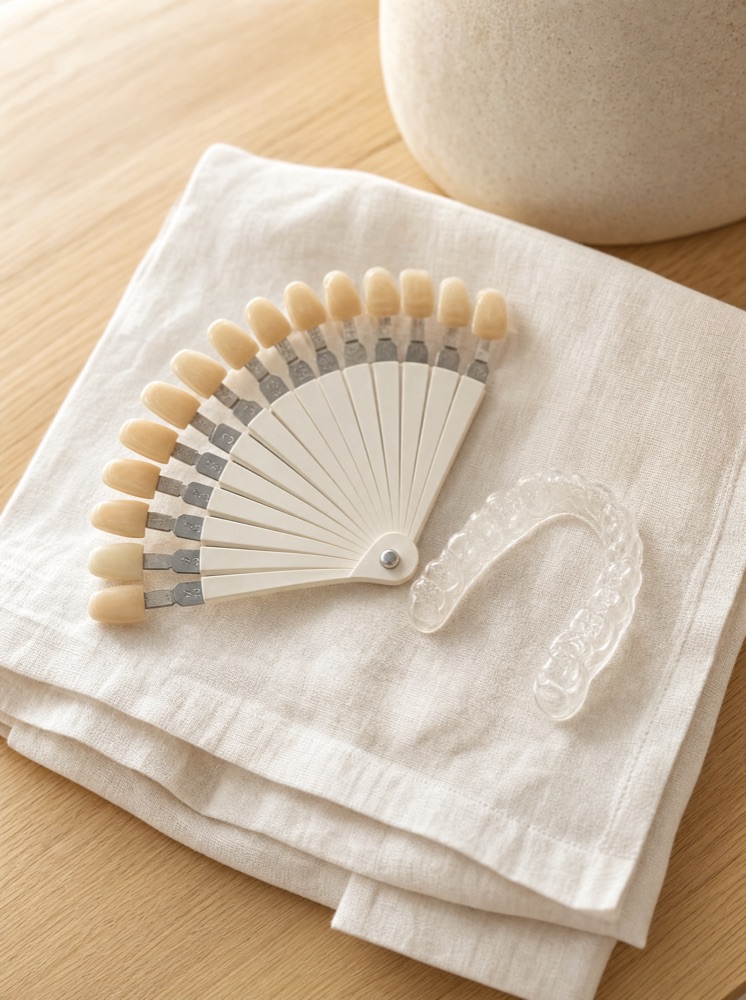
Take-home whitening uses custom trays made from impressions of your teeth, so the gel stays where it belongs instead of spilling onto your gums. You wear them for a set period each day over a couple of weeks. It works more gradually, gives you more control if sensitivity is a concern, and the trays can be reused later for touch-ups.
Some patients do both: an in-office session to make the initial change, then trays at home to maintain it. Dr. Valter will suggest what suits your teeth, your timeline, and your sensitivity level.
What whitening will not change
This is where honest expectations save a lot of disappointment, so it is worth reading before you book.
- Crowns, veneers, bonding, and tooth-colored fillings do not lighten. If you whiten around them, they can end up looking darker by comparison
- Grayish discoloration from certain antibiotics taken in childhood responds poorly compared with yellow-toned staining
- A single tooth that darkened after an injury usually needs a different approach
- Results are not permanent, because staining starts again the moment you go back to your normal diet
- How light your teeth go depends on your starting shade and the type of stain, so no one can promise you a specific shade
What to expect
- Exam first. Whitening gel on a cavity, a cracked tooth, or an exposed root is genuinely uncomfortable, so Dr. Valter checks your teeth and gums before anything is applied.
- Cleaning. Removing surface buildup first means the gel makes contact with the tooth rather than the film on top of it.
- Shade record. Your starting shade is noted, which is the only fair way to judge the result afterward.
- Whitening. Either an in-office session with your gums protected, or custom trays and gel to use at home on the schedule you are given.
- Review and touch-ups. We check the result and talk about maintenance, since the color will gradually drift back over time.
Sensitivity and making it last
Temporary sensitivity to cold is the most common side effect and usually settles within a day or two after treatment ends. Tell us if you already have sensitive teeth, because the approach can be adjusted with lower concentrations, shorter wear times, or a desensitizing product.
To hold your result longer, rinse with water after coffee, tea, or red wine, use a straw for iced drinks that stain, and keep up your regular cleanings. Occasional touch-ups with your trays are normal and expected. If you are planning veneers or a new crown on a front tooth, whiten first, because the shade of those is matched to whatever your teeth look like on the day.
Common questions
How white will my teeth actually get?
That depends on your starting shade and the kind of staining you have, so no dentist can honestly promise you a specific result. Yellow-toned discoloration generally responds better than gray. Dr. Valter will look at your teeth and tell you what is realistic before you spend anything.
Does whitening damage your enamel?
Professional whitening used as directed is not shown to weaken enamel. The sensitivity many people notice is temporary and comes from the gel passing through the tooth, not from enamel being stripped away. The bigger risks come from overusing unsupervised products or whitening over untreated decay, which is exactly why an exam comes first.
Will whitening work on my crown or filling?
No. Dental materials do not respond to whitening gel at all, so a crown, veneer, or tooth-colored filling stays the shade it was made. If you have visible restorations on your front teeth, talk with Dr. Valter first, because whitening the teeth around them can make them stand out.
How long do the results last?
It varies a great deal depending on your diet and habits, with coffee, tea, red wine, and tobacco shortening it considerably. Most patients maintain their result with occasional touch-ups using their custom trays rather than starting over. Regular cleanings help as well.
Is professional whitening different from strips at the drugstore?
Yes, in two main ways: the gel concentration and how it is held against the teeth. Custom trays are made to your mouth so the gel stays on the tooth surfaces instead of leaking onto your gums, and professional treatment starts with an exam that catches problems store products would simply be applied over.
Can I whiten if my teeth are already sensitive?
Often yes, with adjustments. Let us know at your consultation and Dr. Valter can modify the concentration, shorten the wear time, or add a desensitizing step. Sensitivity that has appeared recently should be examined anyway, since it can point to a cavity, a crack, or gum recession.