
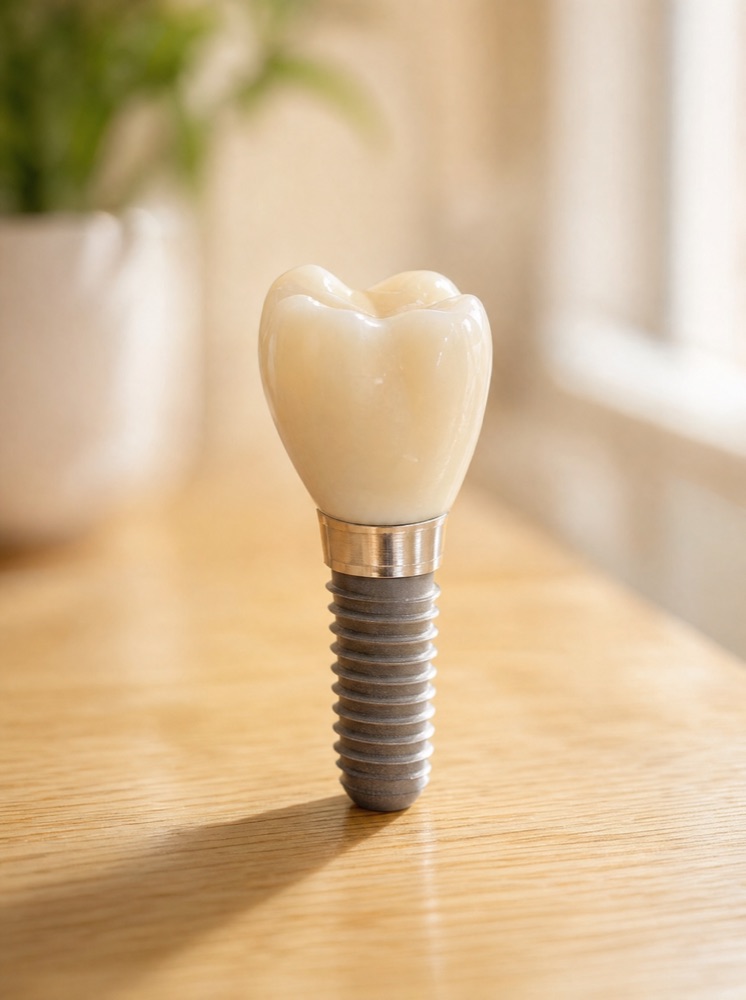
The three parts of an implant
People usually picture one object, but an implant is really three pieces that come together over time. Understanding them makes the rest of the process much easier to follow.
- The post, a small screw-shaped fixture placed in the bone where the root used to be
- The abutment, a connector that sits at the gum line and links the post to the tooth above
- The restoration, the visible crown, bridge, or denture that is attached and shade-matched to your other teeth
Why replacing a missing tooth matters
A gap is not only a cosmetic issue. Teeth rely on their neighbors for position, so when one is lost, the teeth on either side often tip toward the space and the opposing tooth can drift down into it. That changes how your bite meets, which changes where chewing force lands.
The bone matters too. Jawbone maintains its volume partly through the stimulation it gets from a tooth root. Without that, the ridge in that area tends to shrink over time, which is why a long-empty space can start to change the shape of the face around the mouth. Because the post integrates with the bone, an implant is the replacement option that addresses the root as well as the crown.
Options depending on what is missing
Which of these makes sense depends on how many teeth are missing, how much bone is present, the health of your gums, and your budget. Dr. Valter goes through the honest pros and cons of each, including the non-implant alternatives, before you decide.
- A single implant with one crown, for one missing tooth, which leaves the neighboring teeth untouched
- An implant-supported bridge, where two posts carry several teeth across a longer gap
- An implant-supported or implant-retained denture, which anchors a full arch so it is far more stable than a denture resting on gum alone
What to expect
- Evaluation. An exam and x-rays show the amount and quality of bone available, the health of your gums, and the position of nearby roots and nerves. Your medical history is reviewed carefully at this stage.
- Preparation if needed. Some patients need a tooth removed, gum disease treated, or bone grafted before placement. This adds time but improves the odds of a stable result.
- Placement. The post is placed into the bone using local anesthetic. Most patients are surprised by how manageable the appointment is, though soreness for a few days afterward is normal.
- Healing. Bone gradually grows against the surface of the post in a process called osseointegration. This takes months, and the length varies by person and site. A temporary tooth can often be worn during this period.
- Final restoration. Once the post is stable, the abutment and your custom crown are attached and adjusted so the bite feels even.
- Maintenance. Regular cleanings and checkups from that point on, exactly like your natural teeth.
Caring for an implant
An implant cannot get a cavity, but that is not the same as being maintenance free. The gum and bone surrounding it can become inflamed and infected, a condition called peri-implantitis, and if it progresses far enough the implant can loosen and fail.
The prevention is unremarkable and effective: brush twice a day, clean between the teeth daily, keep your cleaning appointments, and tell us if the area ever feels sore or bleeds. How long an implant lasts depends on your bone, your gum health, your habits, and your home care, so no one can promise you a number. What we can do is watch it closely at every visit.
Common questions
How long does the whole dental implant process take?
It usually spans several months from placement to final crown, because the bone needs time to bond with the post. The exact timeline depends on your healing, the site in your mouth, and whether you need an extraction or bone graft first. Dr. Valter will map out the stages for your case before you begin so there are no surprises.
Am I a candidate for a dental implant?
Most healthy adults with enough bone and healthy gums are candidates, but it has to be confirmed with an exam and x-rays. Uncontrolled diabetes, smoking, active gum disease, and certain medications can affect healing, and some of those are manageable rather than disqualifying. Come in and find out rather than guessing.
Does getting an implant hurt?
The placement itself is done with local anesthetic, so you should not feel pain during the procedure. Afterward, expect soreness and some swelling for a few days, which most patients manage well with the instructions we provide. Call us if discomfort increases instead of settling.
Can a dental implant get a cavity?
No, the implant and crown are not made of tooth structure and cannot decay. The tissue around them can still get infected, though, which is why daily cleaning and regular checkups matter just as much as they do for natural teeth.
I have been missing a tooth for years. Is it too late?
Often it is still possible, but the bone in that area may have shrunk, so a graft is sometimes needed to rebuild enough volume to hold a post. An x-ray will show where you stand. Many patients who assumed they had waited too long turn out to have workable options.
Is an implant better than a bridge or a denture?
It depends on your situation rather than on a general rule. An implant preserves the neighboring teeth and stimulates bone, which a traditional bridge does not, but it costs more up front and takes longer. Dr. Valter will lay out all the alternatives, including the ones that cost less, and let you make the call.